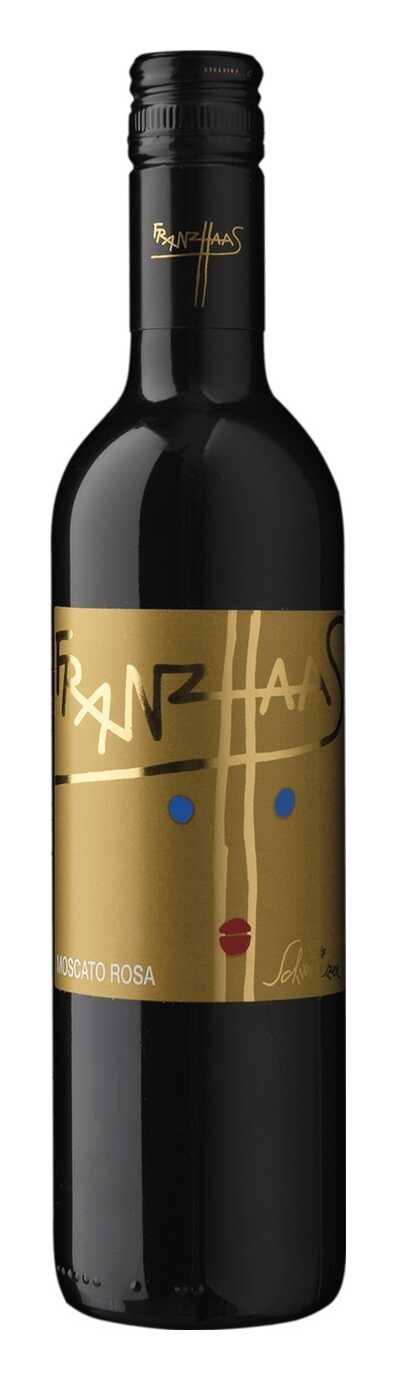
Moscato Rosa DOC FRANZ HAAS
| Sommelier score | 91/100 | 2026 |

| Winery | FRANZ HAAS |
| Denomination | Alto Adige Doc |
| Vintage | 2024 |
| Grapes | 100% Moscato Rosa |
| Alcohol content | 10,50% |
| Cl | 50cl |
| Sulfites | Contains sulphites |
| Winery headquarter | FRANZ HAAS - Montagna (BZ) - Via Villa, 6 |
| Bottle size | Standard bottle |
| Combination | dried Fruit, Desserts, Chocolate |
| Region | Trentino-Alto Adige (Italy) |
| Style | Light and fresh |
| Wine list | Moscato |
| Dichiarazione Nutrizionale, Ingredienti e Raccolta differenziata | Visualizza le informazioni nutrizionali |
Franz Haas' Moscato Rosa originates from vineyards located between 250 and 300 metres above sea level, in well-ventilated areas of South Tyrol, a fundamental condition for preserving the health of the grapes and avoiding the development of moulds that would compromise the aromatic heritage. The soils, with south and southwest exposure, are composed of a mix of porphyry, sand, clay and limestone, capable of giving balance and complexity to the wine. Winemaking takes place with a similar approach to red wines, but with very short maceration to limit the extraction of tannins and maintain elegance and finesse. Once the desired profile is reached, fermentation is stopped by cooling, thus preserving a part of the natural sugars. The wine then ages exclusively in steel until bottling, maintaining its aromatic component and varietal freshness intact.
Characteristics of this South Tyrolean wine
In the calyx it has a bright ruby red color. The olfactory profile is intense and characteristic, dominated by floral notes of rose, accompanied by spicy hints of cinnamon and cloves and citrus nuances of orange peel. On the palate it expresses an elegant and complex structure, in which sweetness, acidity and a slight tannic component integrate harmoniously. The sip is enveloping but never cloying, supported by a lively freshness that gives balance and lengthens the aromatic persistence.
Recommended pairings with this wine by Franz Haas
It is a very versatile sweet wine, capable of ranging from aperitif to meditation wine. It pairs ideally with chocolate desserts, dry cakes and berry tarts, but can also surprise in more original combinations. The recommended serving temperature is between 14 and 16 °C, ideal to enhance its aromatic profile without weighing down the perception of sweetness.
![Prosecco DOC Extra Dry [CANEVEL]](https://data.negoziodelvino.it/imgprodotto/prosecco-doc-extra-dry_16143_ico.jpg "Prosecco DOC Extra Dry [CANEVEL]")
![Valpolicella DOC [COFFELE]](https://data.negoziodelvino.it/imgprodotto/valpolicella-doc_16652_ico.jpg "Valpolicella DOC [COFFELE]")
![Chianti Classico DOCG [BANFI]](https://data.negoziodelvino.it/imgprodotto/chianti-classico-docg_7702_ico.jpg "Chianti Classico DOCG [BANFI]")
![Chardonnay DOC [KETTMEIR Santa Margherita]](https://data.negoziodelvino.it/imgprodotto/chardonnay-doc_14786_ico.jpg "Chardonnay DOC [KETTMEIR Santa Margherita]")
![Asti DOCG [COCCHI]](https://data.negoziodelvino.it/imgprodotto/asti-docg_16623_ico.jpg "Asti DOCG [COCCHI]")
![Moscato Rosa [GIORGI]](https://data.negoziodelvino.it/imgprodotto/moscato-rosa_8338_ico.jpg "Moscato Rosa [GIORGI]")
![Lugana DOC [ZONIN]](https://data.negoziodelvino.it/imgprodotto/lugana-doc_15176_ico.jpg "Lugana DOC [ZONIN]")
![Barbaresco DOCG [PIO CESARE]](https://data.negoziodelvino.it/imgprodotto/barbaresco-docg_12979_ico.jpg "Barbaresco DOCG [PIO CESARE]")
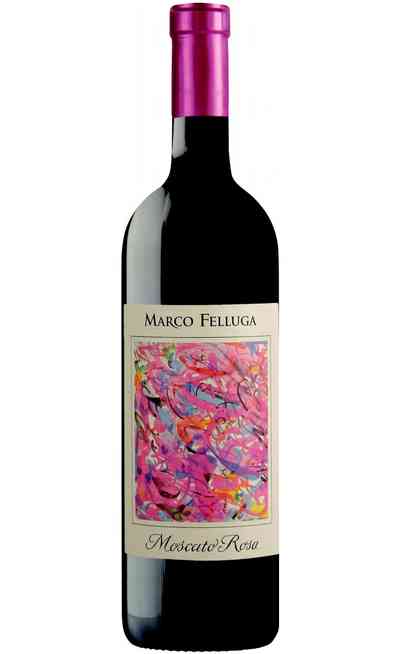
![Moscato Rosa [MARCO FELLUGA]](https://data.negoziodelvino.it/imgprodotto/moscato-rosa_12305_ico.jpg "Moscato Rosa [MARCO FELLUGA]")
![Dolcetto d'Alba DOC [Filari di Luna]](https://data.negoziodelvino.it/imgprodotto/dolcetto-dalba-doc_7863_ico.jpg "Dolcetto d'Alba DOC [Filari di Luna]")
![Dolcetto d'Alba DOC [Massucco]](https://data.negoziodelvino.it/imgprodotto/dolcetto-dalba-doc_7249_ico.jpg "Dolcetto d'Alba DOC [Massucco]")
![Sauvignon [Colle Villano]](https://data.negoziodelvino.it/imgprodotto/sauvignon_10921_ico.jpg "Sauvignon [Colle Villano]")