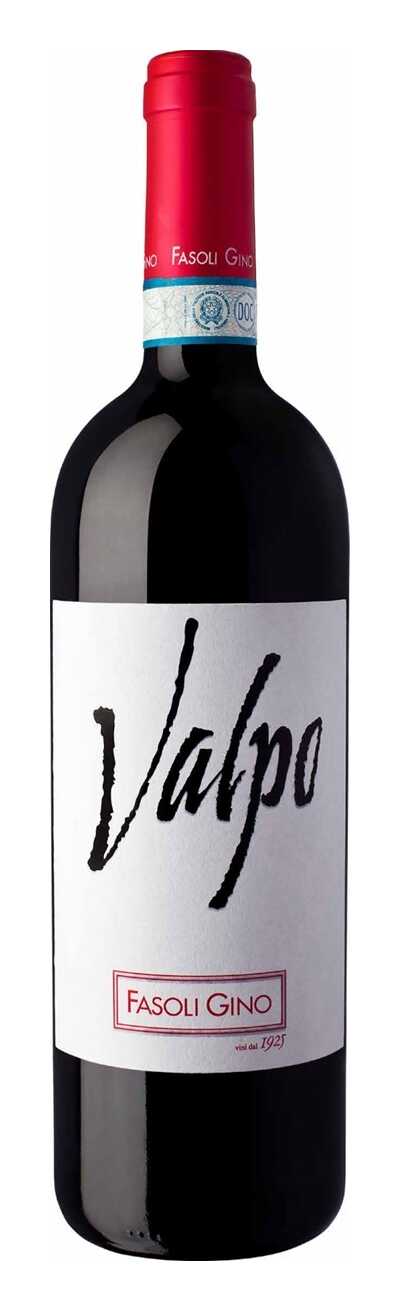
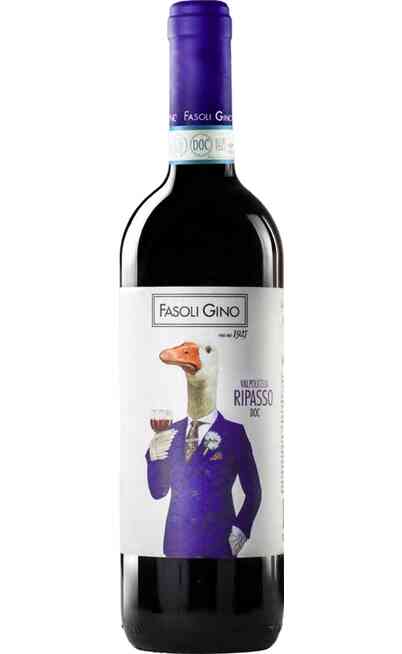
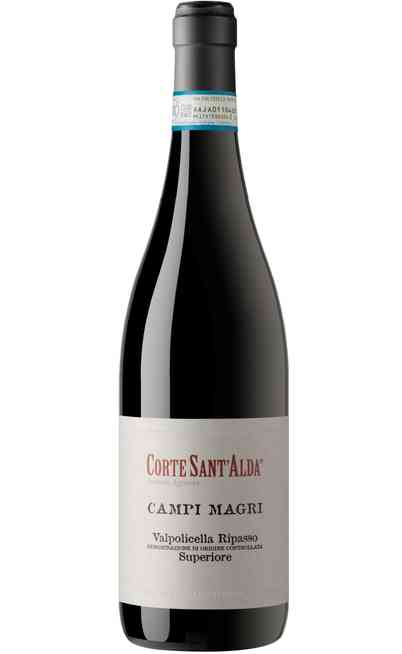
Valpolicella Ripasso Superiore VALPO DOC BIO FASOLI GINO
| Sommelier score | 90/100 | 2026 |
| Winery | FASOLI GINO |
| Denomination | Valpolicella Ripasso Superiore Doc |
| Vintage | 2018 |
| Grapes | Corvinone, Corvina, Rondinella |
| Organic | Yes |
| Alcohol content | 15,00% |
| Cl | 75cl |
| Sulfites | Contains sulphites |
| Winery headquarter | FASOLI GINO - Colognola ai colli (VR) - Via Cesare Battisti, |
| Bottle size | Standard bottle |
| Combination | Milanese cutlet, Meat stewed, Fillet with green pepper, Hard cheese, spicy cheese, wild game, Florentina Steak, mushroom risotto, Tagliatelle with mushrooms, Tortellini with meat sauce, Sliced beef |
| Region | Venetian (Italy) |
| Style | Medium-bodied and fragrant |
| Wine list | Valpolicella Classico Ripasso |
The Valpolicella Ripasso Superiore DOC “Valpo” from the Fasoli Gino winery is made from Corvinone, Corvina and Rondinella grapes from the hilly vineyards of Valpolicella, characterised by calcareous and stony soils. The harvest is manual, with careful selection of bunches between late September and early October. After harvesting, the grapes are left to wilt for about 20–30 days in a cool environment. The first fermentation takes place in temperature-controlled wooden barrels, followed by a second fermentation in 500-liter barrels for approximately four months. The wine is then subjected to the traditional Ripasso method, remaining in contact with the Amarone skins together with a small addition of dried grapes, acquiring greater structure, intensity and complexity. The final aging lasts two to four years in barrels of different sizes.
Characteristics of this wine from the Veneto
In the glass it appears with a deep ruby red color. On the nose it expresses an intense and complex bouquet, with spicy notes of cinnamon, cloves and black pepper. On the palate it is soft, elegant and full-bodied, with well-integrated tannins and a harmonious balance between structure and freshness.
Recommended pairings with this red wine from Fasoli Gino
It pairs perfectly with grilled red meats, roasts, braised meats, game, and aged cheeses, but also pairs very well with structured first courses such as Amarone risottos or pappardelle with wild boar ragù. The recommended service temperature is 17–18 °C.
![Bianco d'Italia 24 CARATI [TENUTA ANTONINI]](https://data.negoziodelvino.it/imgprodotto/bianco-ditalia-24-carati_17127_ico.jpg "Bianco d'Italia 24 CARATI [TENUTA ANTONINI]")
![Lambrusco Grasparossa di Castelvetro Secco TASSO DOP [Fattoria Moretto]](https://data.negoziodelvino.it/imgprodotto/lambrusco-grasparossa-di-castelvetro-secco-tasso-dop_17467_ico.jpg "Lambrusco Grasparossa di Castelvetro Secco TASSO DOP [Fattoria Moretto]")
![Montefalco Rosso LE MURA SARACENE DOC [GORETTI]](https://data.negoziodelvino.it/imgprodotto/montefalco-rosso-le-mura-saracene-doc_17026_ico.jpg "Montefalco Rosso LE MURA SARACENE DOC [GORETTI]")
![Refosco dal Peduncolo Rosso Friuli Colli Orientali DOC [TORRE ROSAZZA]](https://data.negoziodelvino.it/imgprodotto/refosco-dal-peduncolo-rosso-friuli-colli-orientali-doc_16901_ico.jpg "Refosco dal Peduncolo Rosso Friuli Colli Orientali DOC [TORRE ROSAZZA]")
![Sicilia Bianco Riserva Il BIANCO DI LUDOVICO DOC [TENUTE ORESTIADI]](https://data.negoziodelvino.it/imgprodotto/sicilia-bianco-riserva-il-bianco-di-ludovico-doc_17255_ico.jpg "Sicilia Bianco Riserva Il BIANCO DI LUDOVICO DOC [TENUTE ORESTIADI]")
![Ruchè di Castagnole Monferrato DOCG [BAVA]](https://data.negoziodelvino.it/imgprodotto/ruchè-di-castagnole-monferrato-docg_16608_ico.jpg "Ruchè di Castagnole Monferrato DOCG [BAVA]")
![Spumante Metodo Classico Extra Brut Rosè de Noirs [CANTINA PUIATTI]](https://data.negoziodelvino.it/imgprodotto/spumante-metodo-classico-extra-brut-rosè-de-noirs_16987_ico.jpg "Spumante Metodo Classico Extra Brut Rosè de Noirs [CANTINA PUIATTI]")
![Spumante Ribolla Gialla Brut RIBULA 1585 [CONTE D'ATTIMIS-MANIAGO]](https://data.negoziodelvino.it/imgprodotto/spumante-ribolla-gialla-brut-ribula-1585_17012_ico.jpg "Spumante Ribolla Gialla Brut RIBULA 1585 [CONTE D'ATTIMIS-MANIAGO]")
![Riserva Ducale Chianti Classico LA LEGGENDA DOCG [RUFFINO 1877]](https://data.negoziodelvino.it/imgprodotto/riserva-ducale-chianti-classico-la-leggenda-docg_16823_ico.jpg "Riserva Ducale Chianti Classico LA LEGGENDA DOCG [RUFFINO 1877]")
![AQUA DI VENUS rosé [RUFFINO 1877]](https://data.negoziodelvino.it/imgprodotto/aqua-di-venus-rosé_16810_ico.jpg "AQUA DI VENUS rosé [RUFFINO 1877]")
![Buttafuoco dell'Oltrepò Pavese Metellianum DOC [Monterucco]](https://data.negoziodelvino.it/imgprodotto/buttafuoco-delloltrepò-pavese-metellianum-doc_16020_ico.jpg "Buttafuoco dell'Oltrepò Pavese Metellianum DOC [Monterucco]")
![CRISTO DI CAMPOBELLO Classic Method Extra Brut Sparkling Wine 36 Months [BAGLIO DEL CRISTO DI CAMPOBELLO]](https://data.negoziodelvino.it/imgprodotto/cristo-di-campobello-classic-method-extra-brut-sparkling-wine-36-months_17534_ico.jpg "CRISTO DI CAMPOBELLO Classic Method Extra Brut Sparkling Wine 36 Months [BAGLIO DEL CRISTO DI CAMPOBELLO]")